From the early Bandai Carddass cards to Kazuki Takahashi’s original artwork
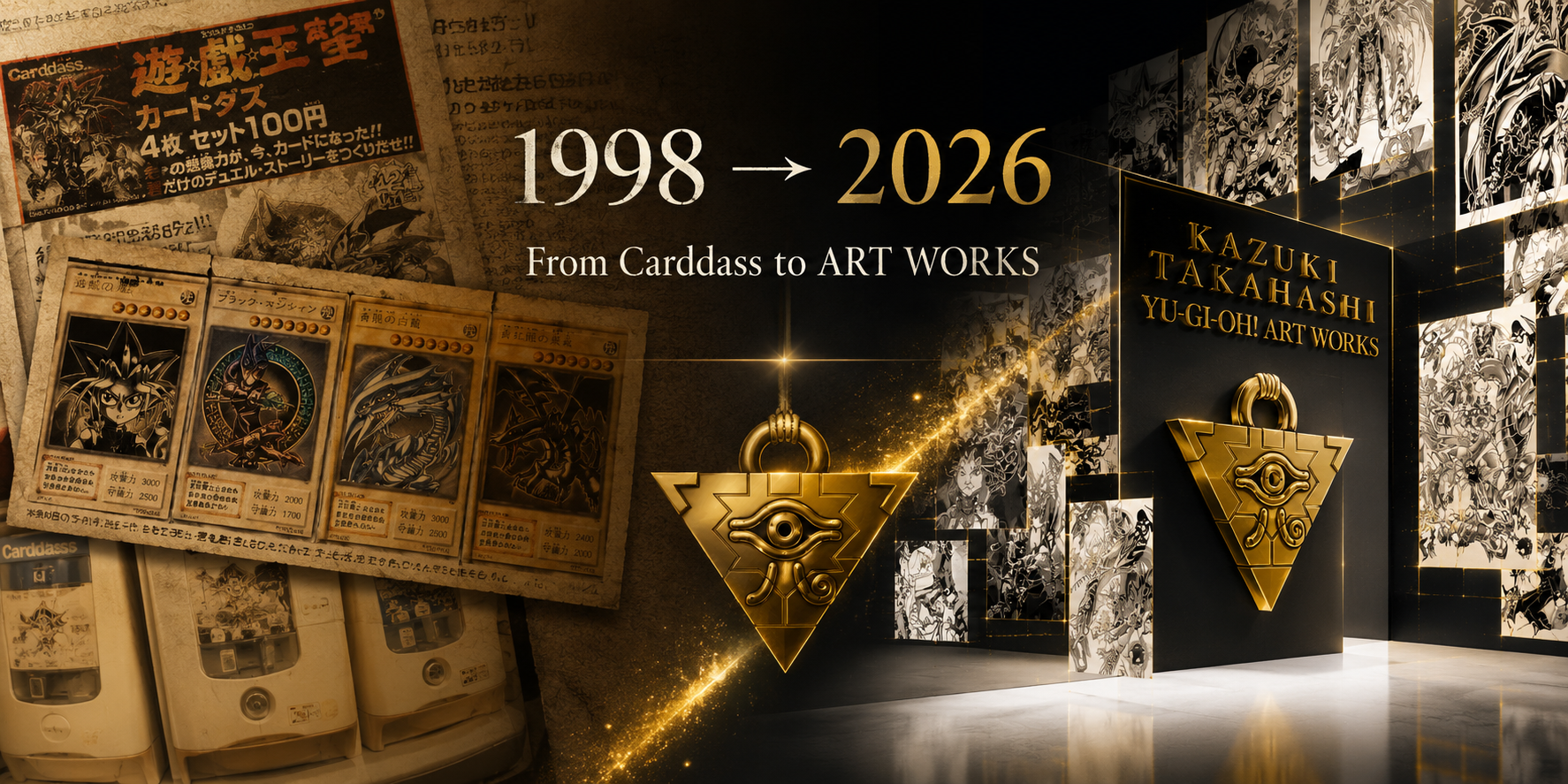
Yu-Gi-Oh! is now one of the most recognizable card games in the world.
For many people today, the name immediately brings to mind tournament decks, booster boxes, rare cards, anime characters, or iconic monsters such as Blue-Eyes White Dragon and Dark Magician.
But that is not really where Yu-Gi-Oh! began.
And for me, that is also why Yu-Gi-Oh! has never been just a card game.
It began with a manga.
Before there was an OCG, before international tournaments, and before billions of cards had been printed, there was simply an idea drawn on paper by Kazuki Takahashi.
Early in the original manga, a fictional card game called Magic & Wizards appeared.
The rules were still very simple compared with the Yu-Gi-Oh! we know today. Monsters faced each other, attack and defense values mattered, and the complicated layers of summoning methods, chains and card interactions that later defined the game did not yet exist.
But something about the idea worked.
A game that originally existed inside a manga gradually began moving into the real world.
Before the OCG: the Bandai cards
This is one part of Yu-Gi-Oh! history that I think is especially interesting.
Before KONAMI released the Official Card Game, Bandai produced Yu-Gi-Oh! cards in Japan in 1998.
They were distributed through Carddass vending machines, a familiar part of Japanese toy and hobby culture at the time.
The original Bandai flyer from 1998 advertises the first set as:
42 different cards.
Four cards for 100 yen.
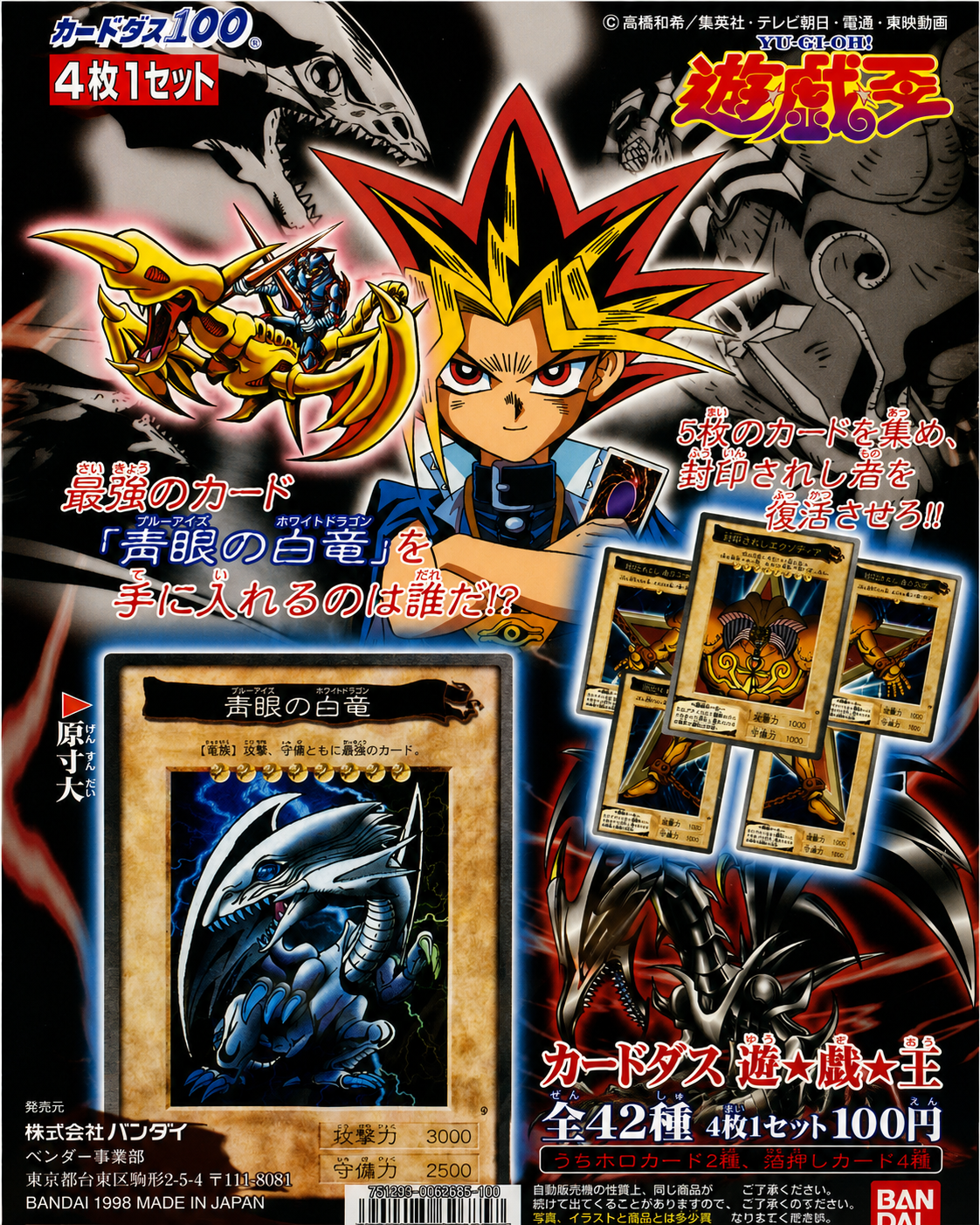
There were no booster boxes like the ones collectors are familiar with today.
You put 100 yen into the machine and received four cards.
Looking at that flyer now feels very different from looking at a modern TCG advertisement.
The designs are rougher.
The rules were much less standardized.
The whole product still feels very close to the manga.
Bandai continued the series through three releases before the KONAMI era began.
Today, collectors usually refer to these simply as the Bandai version or pre-OCG Yu-Gi-Oh! cards.
You may occasionally hear unusual Japanese collector nicknames for them, but I prefer “Bandai version.” It avoids confusion and describes exactly what they are.
One thing I find charming about these cards is how experimental everything still felt.
Rules and instructions appeared across the products themselves, and the game had not yet developed into the highly structured system we know today.
I sometimes wonder how many people at the time simply played according to what they remembered from the manga.
There was something very unpolished about that era.
And I mean that in a good way.
February 4, 1999
Then came the moment that changed everything.
On February 4, 1999, KONAMI launched Yu-Gi-Oh! Official Card Game Duel Monsters Vol.1 in Japan.
Each pack contained five cards and cost 150 yen.
That small Japanese card game became something much larger surprisingly quickly.
By 2011, Yu-Gi-Oh! had already passed 25.1 billion cards sold worldwide, earning recognition from Guinness World Records.
It is difficult to look at numbers like that and connect them with a 100-yen Carddass machine from 1998.
But that connection is exactly what fascinates me.
One did not simply replace the other.
You can almost watch Yu-Gi-Oh! discovering what it wanted to become.
The cards Japanese collectors call “early Yu-Gi-Oh!”
The earliest KONAMI cards also have their own visual identity.
Collectors in Japan often loosely refer to these as 初期カード – early cards.
The original Series 1 layout looked noticeably different from later Yu-Gi-Oh! cards, with different artwork proportions, text positioning and design details.
As the OCG evolved around 2000, the rules and card layouts changed as well.
That distinction is important.
It does not mean that characters such as Blue-Eyes White Dragon or Dark Magician were never reprinted.
Of course they were.
But production of those original early layouts ended, and the first printings from that particular period became a collecting category of their own.
That is something I understand very well as a collector.
Sometimes the important thing is not simply which card it is.
It is which version, from which period, and what story exists behind that piece of cardboard.
Some tournament cards, promotional cards and early Japanese releases from that period now trade for extraordinary amounts.
But price alone is not what makes them interesting to me.
A modern reprint can show the same monster.
It cannot recreate the moment when people were seeing that monster on a physical card for the first time.
That difference matters.
And now, almost 30 years later…
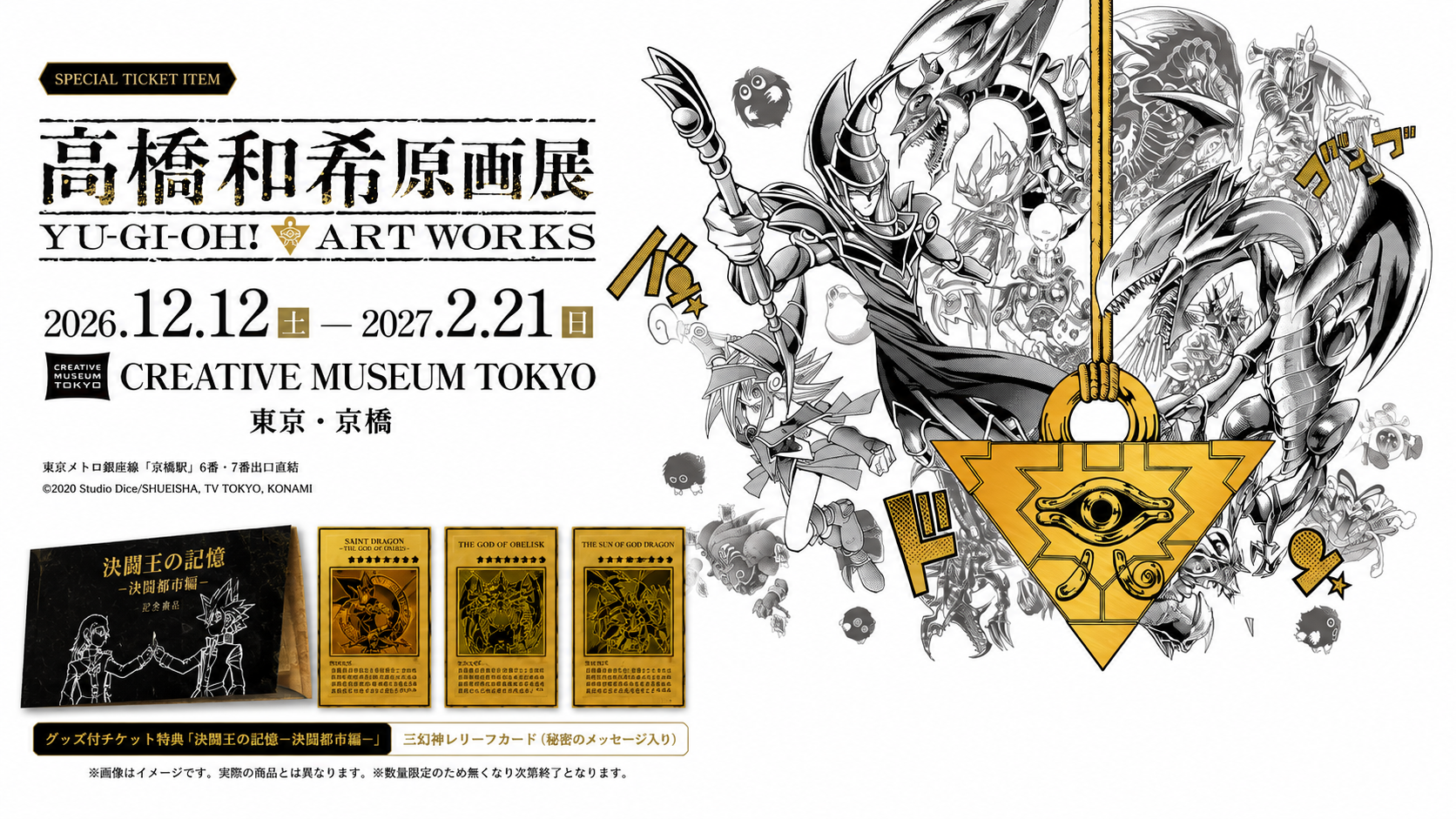
This December, Yu-Gi-Oh! is going somewhere that feels strangely appropriate.
From December 12, 2026 to February 21, 2027, Tokyo will host:
KAZUKI TAKAHASHI: YU-GI-OH! ART WORKS
at CREATIVE MUSEUM TOKYO.
For me, this exhibition is interesting for a reason that goes beyond nostalgia.
After years of booster packs, tournaments, rarity systems, grading, market prices and countless different versions of the cards, we are going back to the beginning.
Back to drawings.
Back to character designs.
Back to monsters that first existed as lines on a page.
Back to Kazuki Takahashi.
That feels important.
Because before Yu-Gi-Oh! became one of the world’s biggest trading card games, it was the imagination of one manga artist.
The three Egyptian Gods – but not OCG cards
One exhibition item has already attracted a lot of attention among collectors.
A special merchandise-included ticket offers a commemorative item officially called the “Mark of the King of Duelists.”
It contains three collection cards based on the original manga designs of the Egyptian Gods:
Slifer the Sky Dragon
Obelisk the Tormentor
The Winged Dragon of Ra
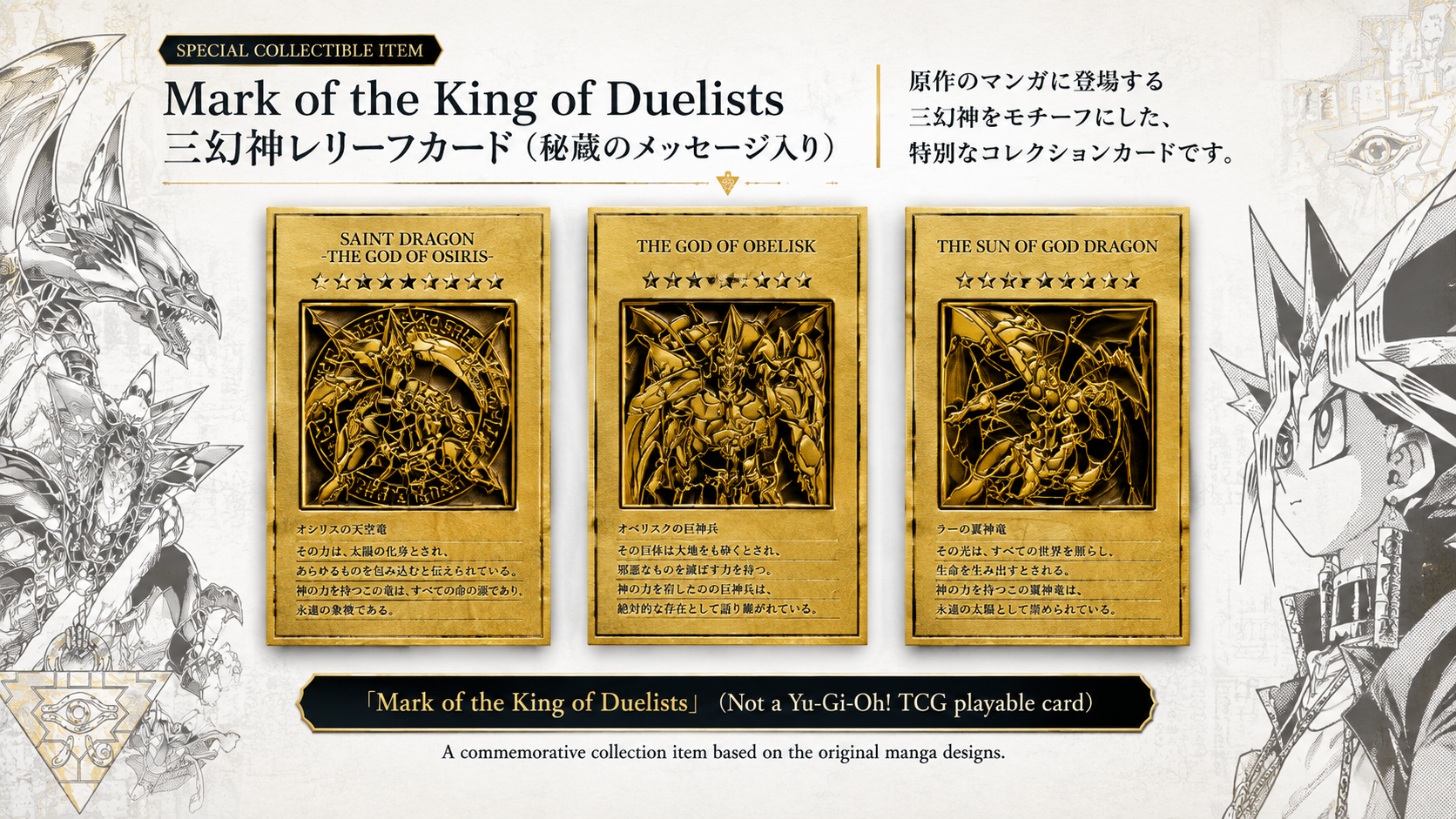
There is one detail worth making very clear:
These are not playable Yu-Gi-Oh! TRADING CARD GAME cards.
They are commemorative collection items based on the original manga designs.
And I actually think that makes them more interesting, not less.
They belong to the world of the original manga rather than the modern competitive card game.
They are objects created to celebrate Takahashi’s artwork.
There is also no reason to exaggerate their scarcity.
Although the merchandise-included ticket itself has limited availability, the organizers have already announced that the same item will also be offered through made-to-order sales after the exhibition.
So, for me, the appeal is not:
“This will be impossible to get.”
It is something much more interesting:
What does this object represent?
It connects the original manga designs, the Egyptian Gods, Kazuki Takahashi’s first major art exhibition, and almost three decades of Yu-Gi-Oh! history.
For a collector, context like that can matter just as much as rarity.
From a 100-yen machine to an art museum
When I look again at the old 1998 Bandai flyer, I do not only see an old advertisement.
I see Yu-Gi-Oh! at a strange transitional moment.
The game had left the pages of the manga, but it had not yet become the Yu-Gi-Oh! we know today.
Four cards for 100 yen.
Forty-two designs.
A simple Carddass machine somewhere in Japan.
Then came the OCG.
Then international expansion.
Then tournaments, collectors, grading, enormous secondary markets and billions of cards.
And now, in 2026, there is something almost poetic about returning to an exhibition of Kazuki Takahashi’s original drawings.
We spent decades collecting the cards.
Now we get another chance to look at the art that made those cards possible in the first place.
Maybe that is why Yu-Gi-Oh! still means something to me after all these years.
It was never only about winning a duel.
And it was never only about the price of a rare card.
It was about the strange journey of an idea — from manga, to a vending machine, to card shops all over the world.
And finally, back to the artwork where it started.
If you are looking for older Japanese Yu-Gi-Oh! cards, Bandai-era items, early OCG releases, or something related to the upcoming exhibition, feel free to contact me through HAKATA7.
If there is something specific you have been trying to find in Japan, tell me what it is.
I am always happy to take a look from here in Fukuoka.
 HAKATA7