I Wasn’t Looking for Anything – That’s the Problem with HARD OFF
I wasn’t actually planning to write a blog post about this.
But I thought it might be nice to show a little more of my everyday life in Japan once in a while.
Most people who read this blog probably found me through trading cards, so I sometimes feel like I should always be writing about Pokémon, ONE PIECE, Yu-Gi-Oh!, or whatever the latest release happens to be.
But I do look at other things.
Actually, quite a lot of other things.
So today, no cards.
I drove about 30 minutes from my home in Fukuoka and stopped by a local HARD OFF.
Nothing special.
No big mission.
I just wanted to see if anything interesting had appeared.
And that is usually where the trouble starts.
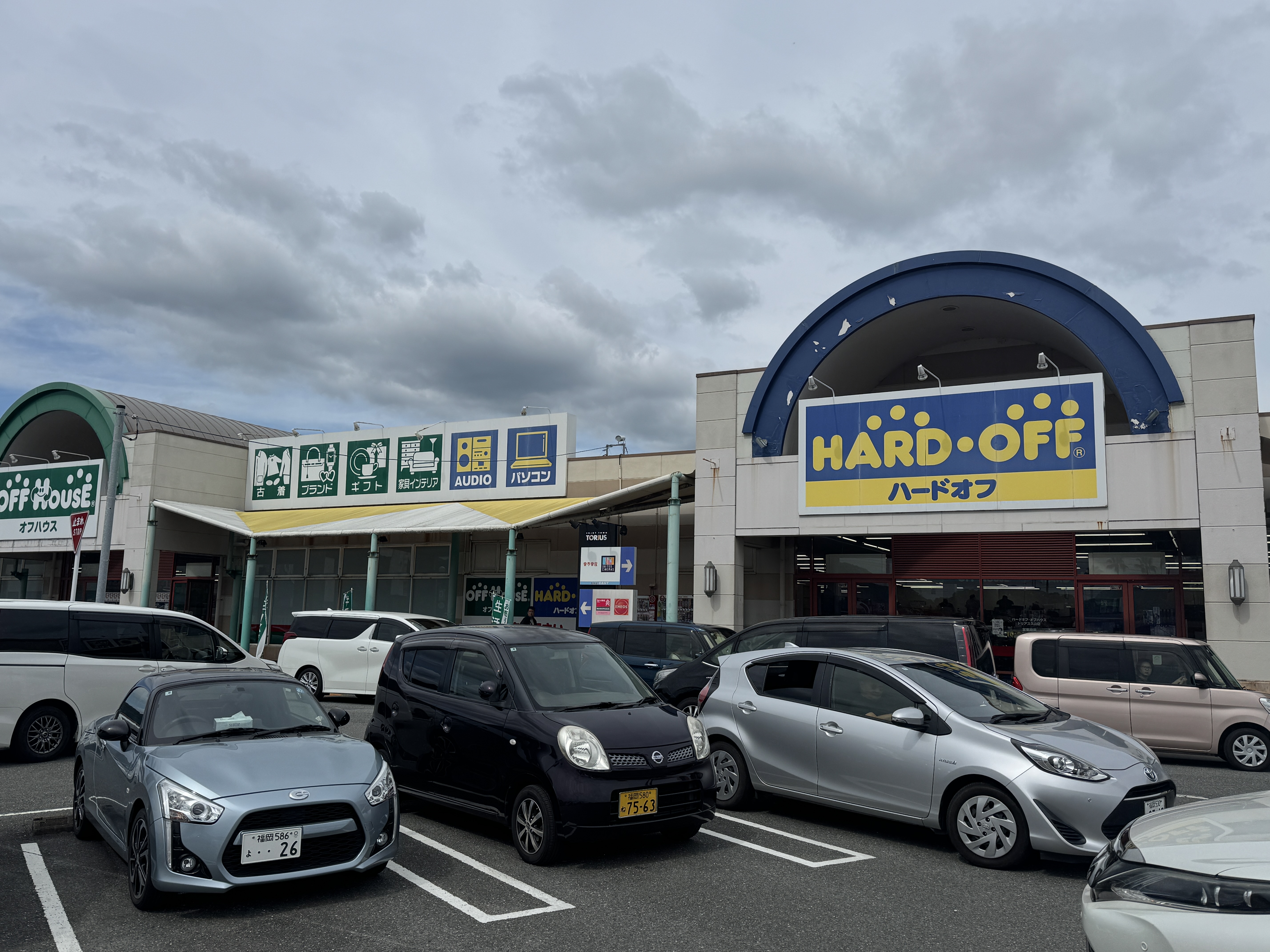
I have always liked old things
I’ve mentioned this before, but outside of cards, I have always been interested in retro games and arcade games.
Over the years, I’ve visited second-hand shops in many different places in Japan, sometimes checking prices, sometimes looking for rare consoles, and sometimes buying things simply because I knew I probably wouldn’t see them again.
Modern game consoles, on the other hand?
Ask me about a Nintendo Switch and I am probably the wrong person.
I really don’t know much about current games.
Old games? Yes.
Old machines that make strange noises and require cables nobody uses anymore?
Much more interesting.
The same thing happens with audio equipment.
Cassette decks, MiniDisc, CD players, DAT machines, old car audio…
I even used to sell old Japanese car audio equipment on eBay.
If I start talking about used electronics, this article will never end, so I’ll stop here.
Probably.
The fun part is that you never know what will be there
HARD OFF buys used items from ordinary people and puts them back on sale.
That means the inventory changes constantly.
With old items in particular, if something disappears, you may never see exactly the same one again.
So timing matters.
That is one reason I keep checking these stores even when I don’t actually need anything.
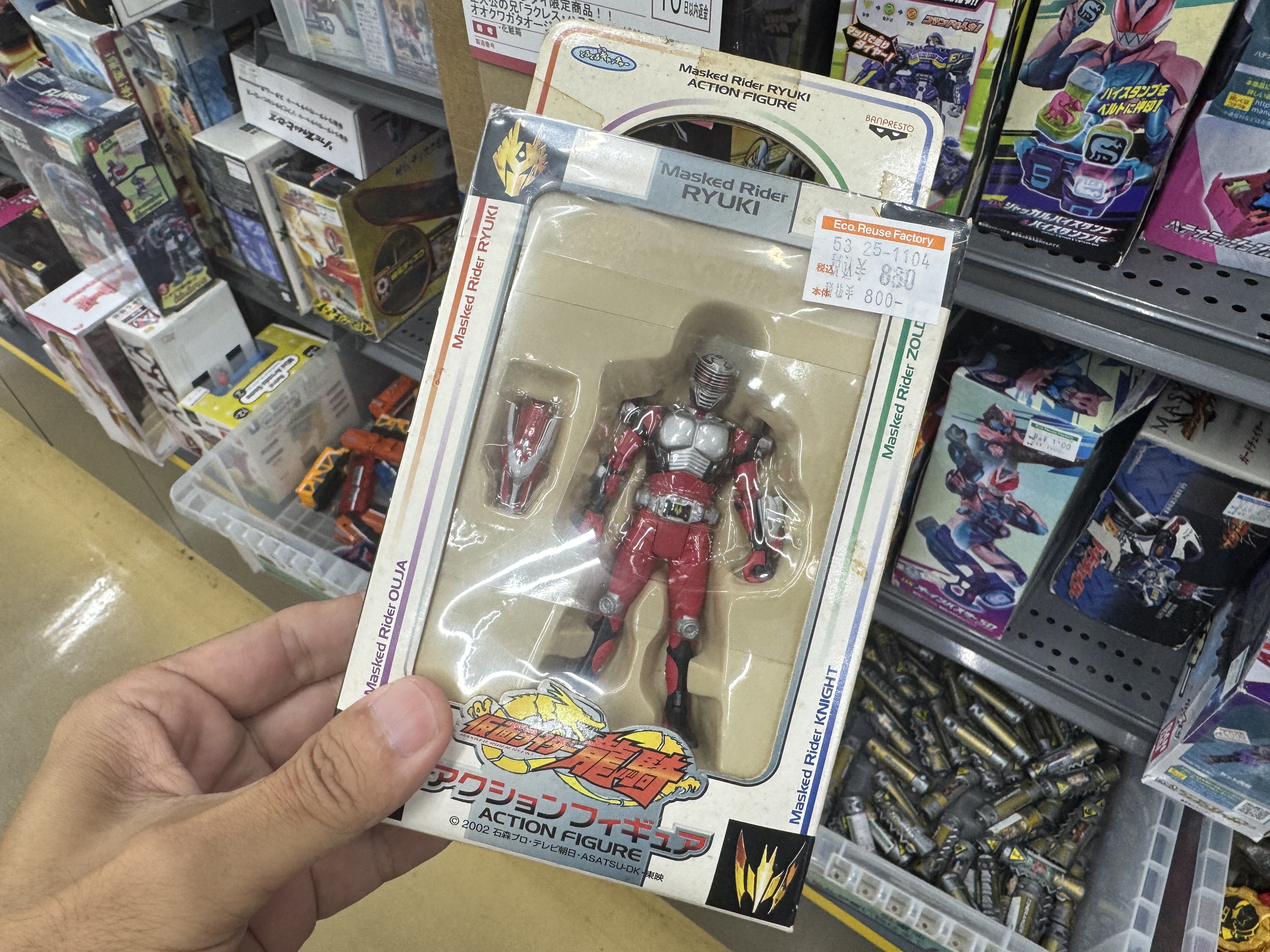
Inside this particular store, there were shelves full of old Japanese toys.
Kamen Rider.
Super Sentai.
Ultraman.
Some looked almost new.
Others were more than 20 years old.
And somehow they were all sitting together as if that were completely normal.
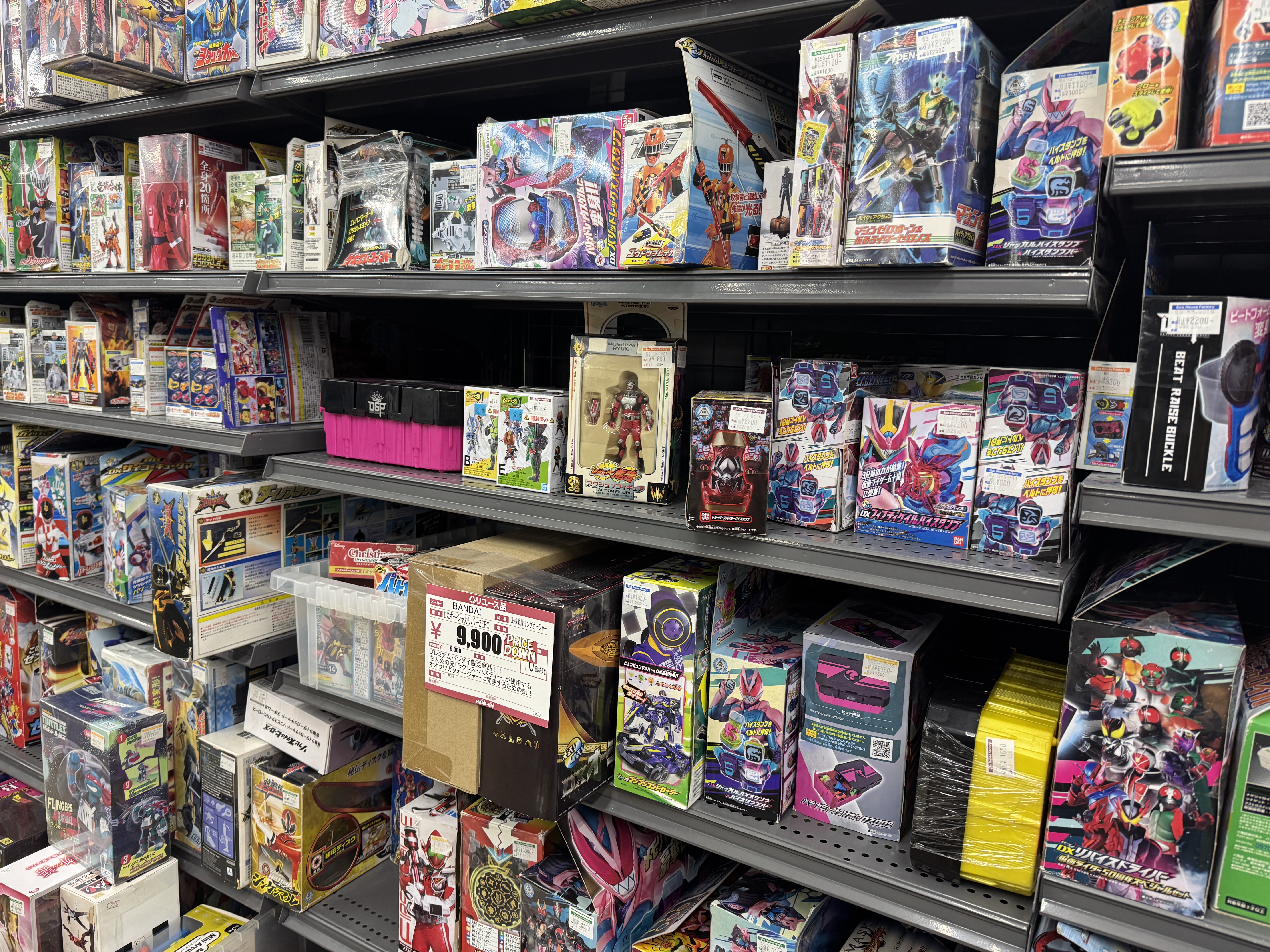
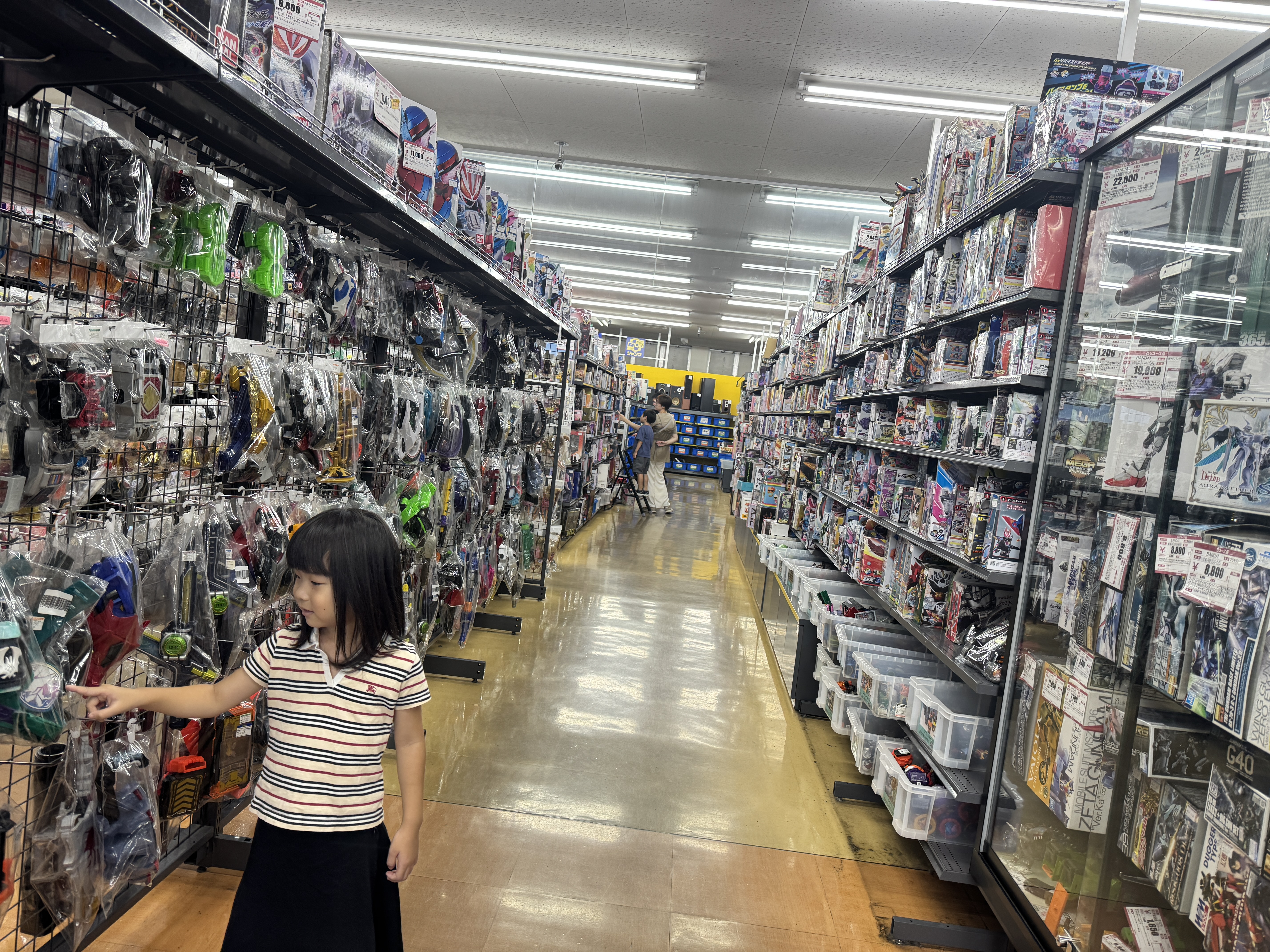
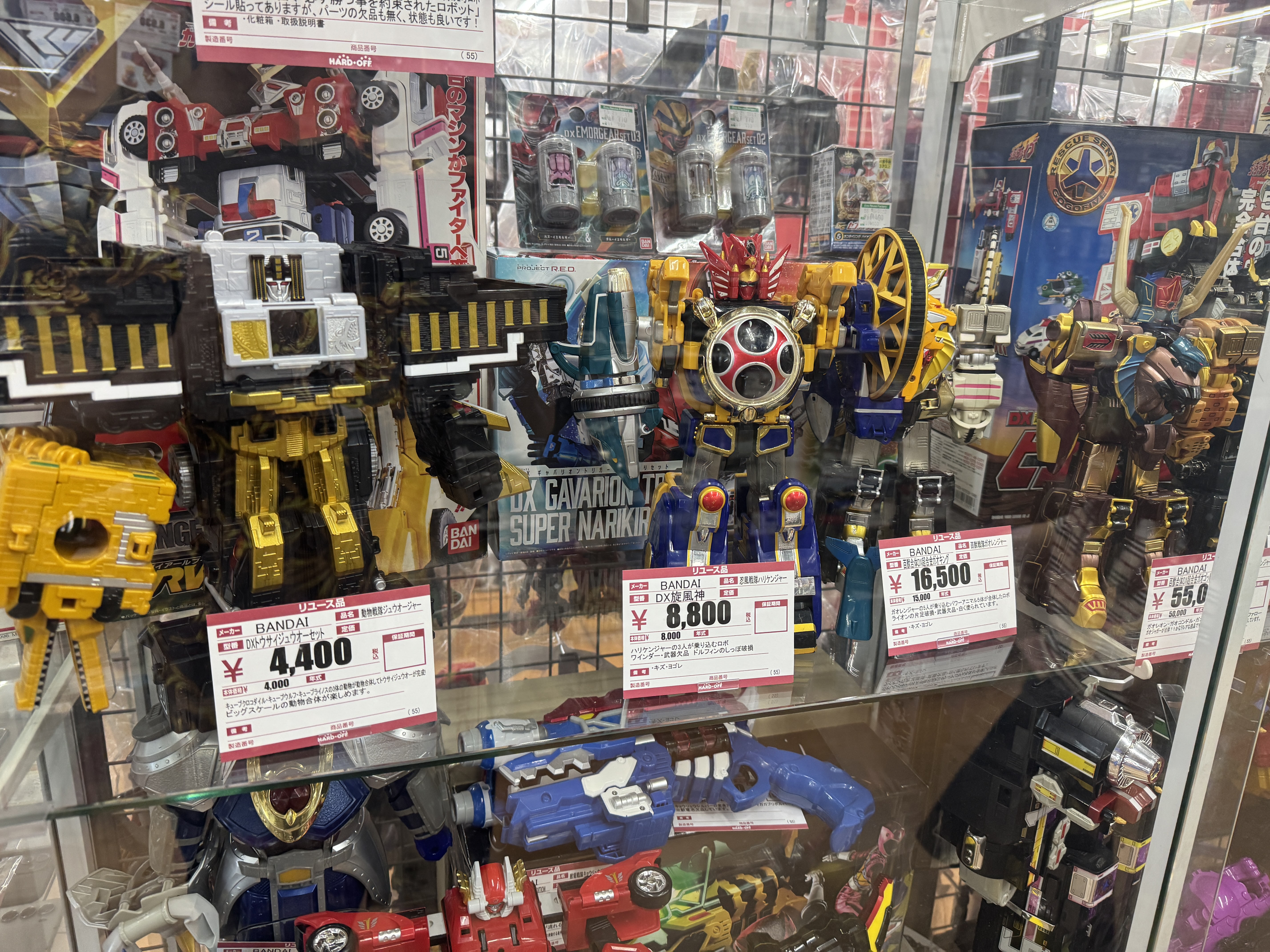
This is exactly the kind of shelf that makes me stop.
I don’t necessarily want to buy anything.
Then I pick something up.
Then I check the price.
Then I start thinking.
This is how trouble starts.
I have thrown away things I now wish I had kept
When I was younger, I don’t remember people around me thinking very much about whether an old television, game machine or piece of electronics might become collectible one day.
Old usually meant old.
Something newer came along, and the old one was replaced.
I did exactly the same thing.
And now there are quite a few things I wish I had never thrown away.
A perfect example is the CRT television.
When Japan moved from analog terrestrial television to digital broadcasting, huge numbers of older CRT televisions were replaced. There were also government-backed incentives encouraging people to switch to newer digital TVs.
At the time, an old CRT simply looked like outdated technology.
Today?
Retro gaming collectors want certain CRT televisions.
And yes…
I eventually paid a surprisingly high price for an old Sony CRT television myself because I wanted one for retro gaming.
So basically, years after everyone was getting rid of them, I paid good money to buy one back.
Excellent planning.
I have a theory about local second-hand stores
There is another reason I find stores around this area interesting.
The area where I live has quite a lot of older residents.
There are also many detached houses compared with the apartment-heavy parts of central Tokyo.
That means people often have closets, spare rooms, garages, sheds and other places where things can sit for a very long time.
I can’t prove that this is the reason.
It is just something I have noticed after looking around second-hand stores for years.
But sometimes very old things suddenly appear.
Toys that may have been sitting in someone’s home for decades.
Old games.
Audio equipment.
Musical instruments.
Clothing.
Japanese toys, of course, but also things like Transformers and Star Wars merchandise.
Occasionally you hear stories in Japan about house clear-outs where old cards or toys that had been forgotten for 20 or 30 years suddenly turn up.
It makes sense to me.
Someone eventually cleans a room, opens a box and thinks:
“Why am I still keeping this?”
And a few days later, someone like me is standing in HARD OFF looking at it.
And then there is Ultraman
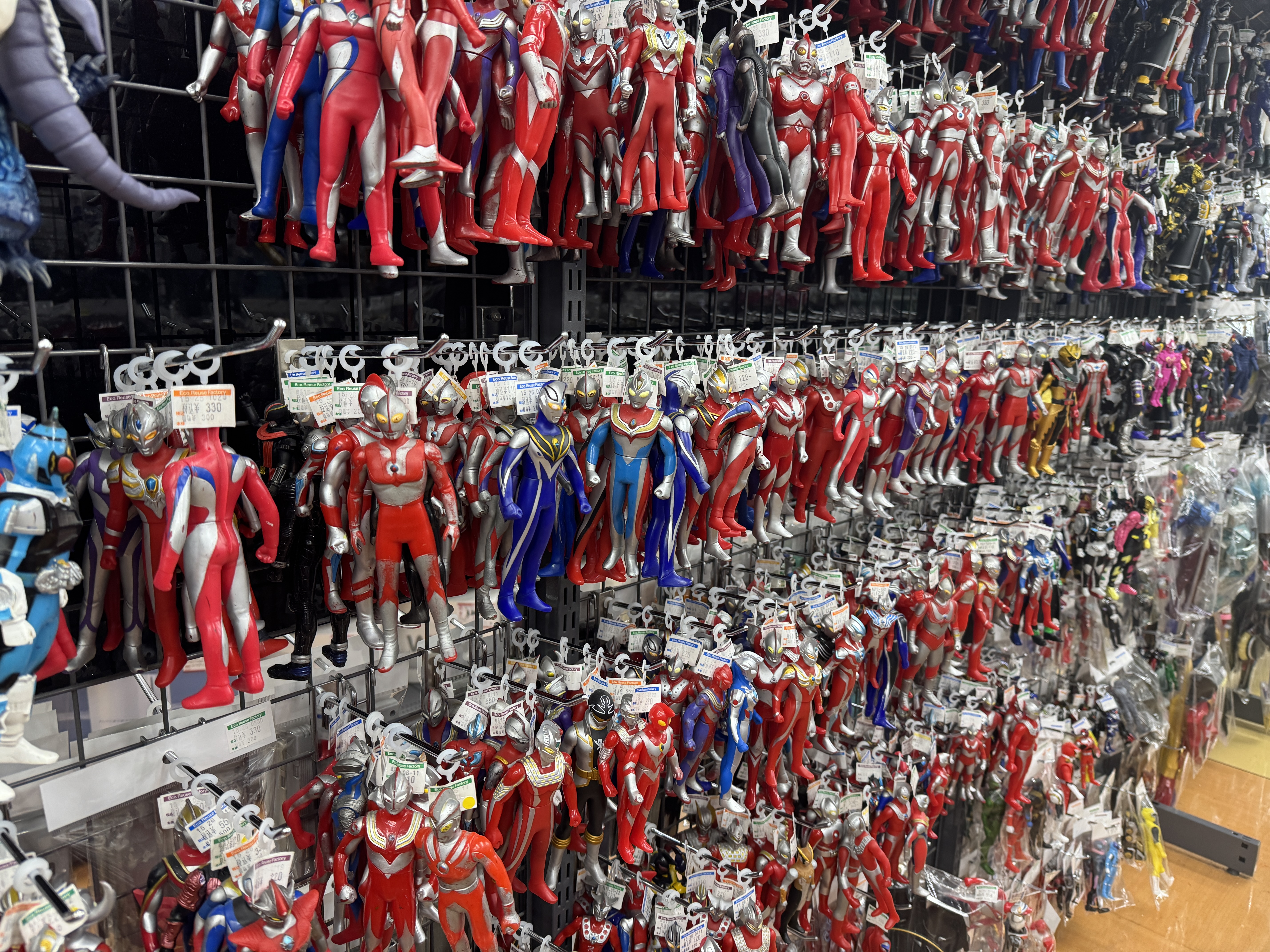
A lot of Ultraman.
I could write:
“Ultraman is popular in Japan.”
And an AI would probably ask me:
“What is your evidence?”
So instead, I’ll just show you the photo.
That should be enough.
This is why I think people should look beyond the obvious places
Of course, if you visit Japan looking for collectibles, places like Akihabara are fantastic.
If you already know exactly what you want, specialist stores are often the easiest way to find it.
But ordinary local second-hand stores are different.
You don’t always find what you were looking for.
Sometimes you find something you weren’t looking for at all.
And personally, I think that is much more fun.
I also find that prices can sometimes be very different from what overseas collectors expect.
Not everything is cheap.
Definitely not.
Stores understand market prices much better now than they did years ago, especially because everyone can check Mercari, eBay and other marketplaces.
But local inventory and local demand still matter.
And occasionally you find something and think:
“Really? That’s the price?”
A 105cm Master Sword
One example from today’s visit was this.
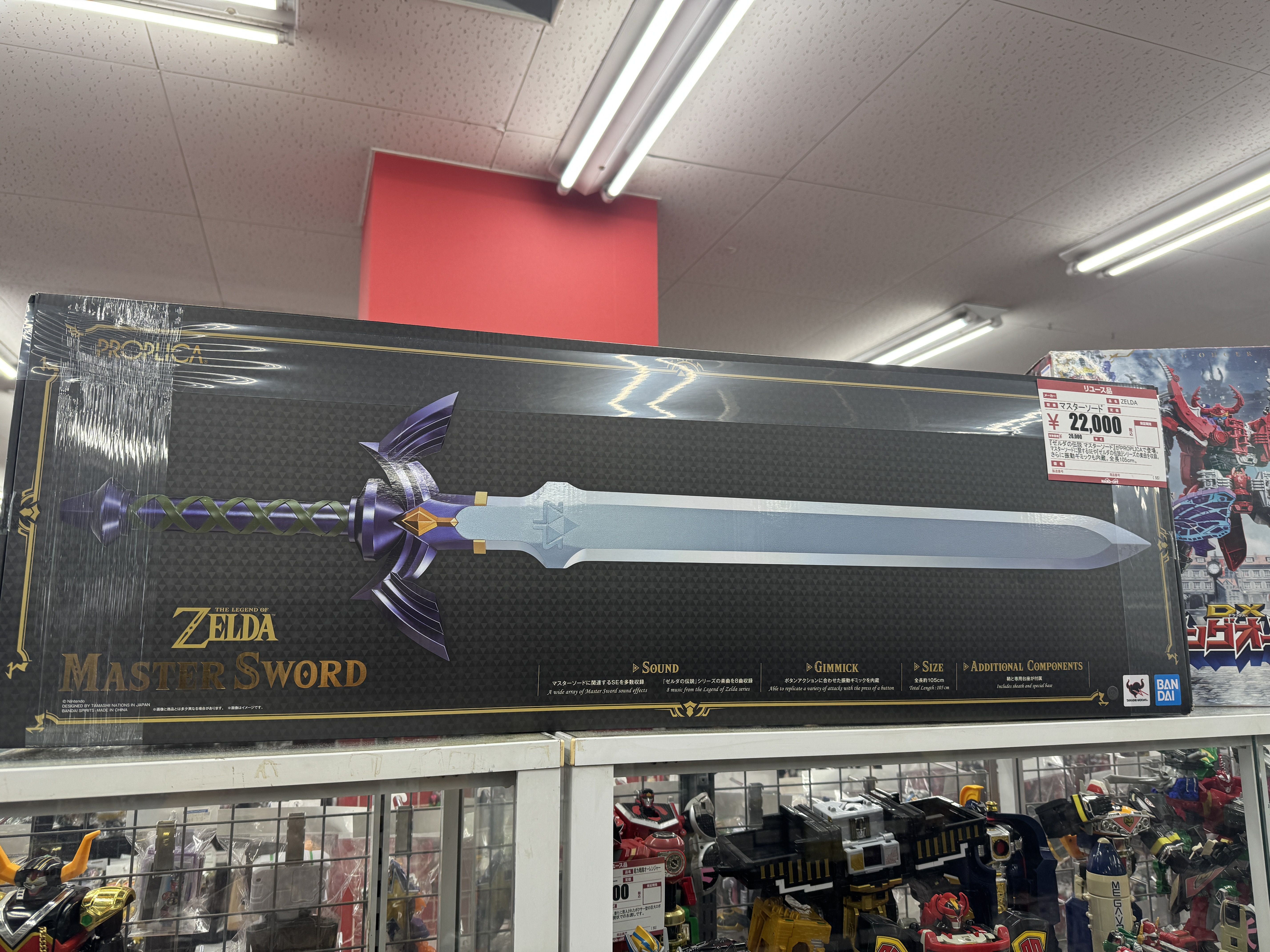
The PROPLICA Master Sword from The Legend of Zelda.
Length: approximately 105 cm.
Price here:
¥22,000.
When I checked overseas listings, I was seeing prices around ¥50,000, depending on condition, seller and shipping.
Same item.
Very different market.
And then, not very far away from it…
¥110 controllers
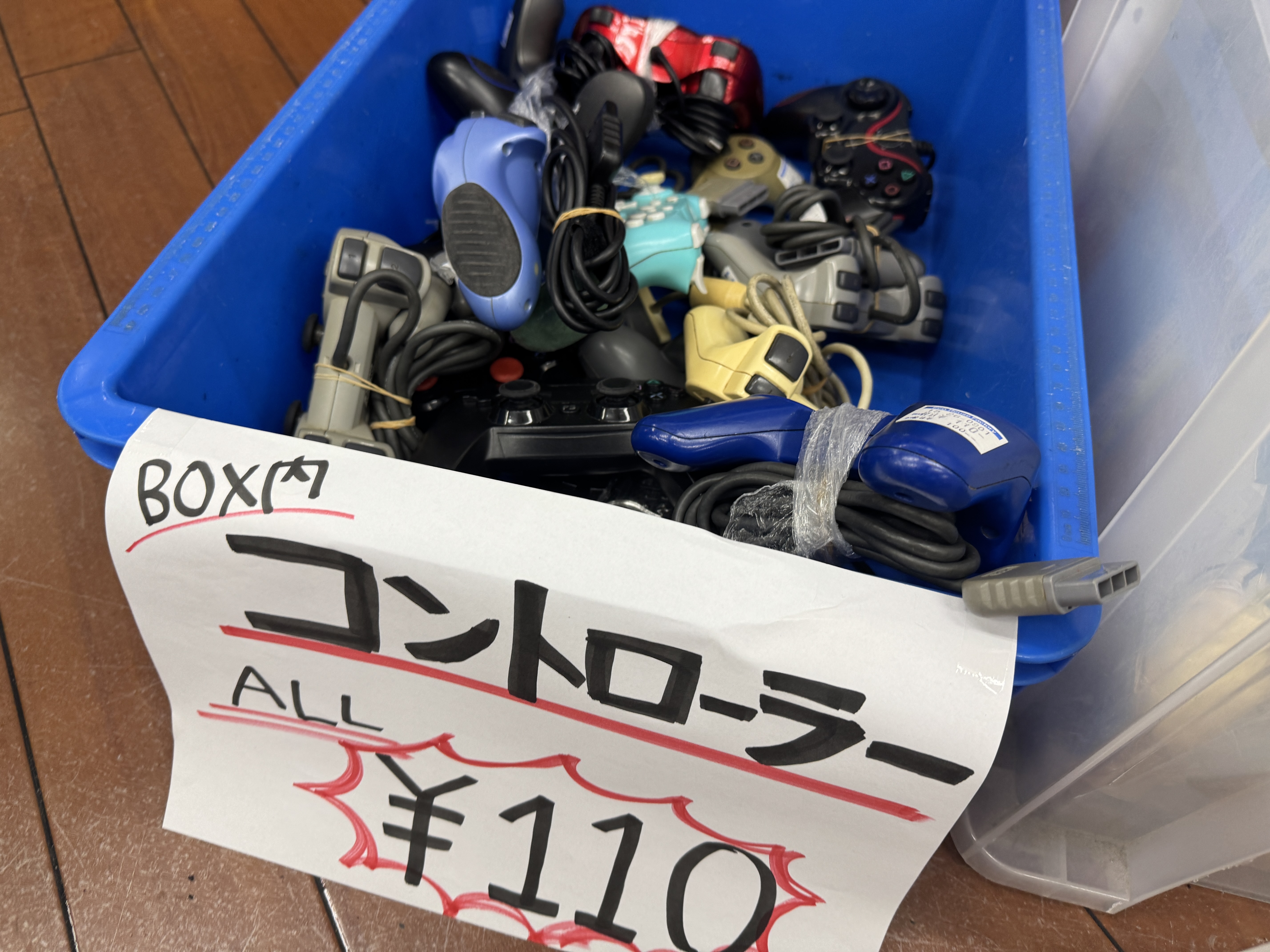
Controllers.
¥110 each.
They are in the junk section, so there is no promise that they work.
Maybe they work.
Maybe they don’t.
That is part of the game.
I don’t need any of them.
But I still looked through the box.
Of course I did.
A ¥22,000 Master Sword and a pile of ¥110 controllers in the same store.
For some reason, that feels completely normal at HARD OFF.
This was just a normal visit
There wasn’t really any bigger reason for today’s trip.
I visit places like this regularly just to see whether anything interesting has appeared.
And almost every time, I notice something different.
For people living in Japan, some of these things may seem completely ordinary.
We may even look at a price and think it is expensive.
But I am curious:
How does this look to you from outside Japan?
Do any of these prices surprise you?
Is there something in these photos that you would immediately pick up?
Or is there some old Japanese game, toy, audio item or other strange piece of Japanese nostalgia that you have been looking for for years?
If so, feel free to send me a photo.
I’m in shops like this anyway.
I can’t promise I’ll find it tomorrow — or ever.
But I’ll put it on my radar.
And even if you’re simply curious about Japanese second-hand stores, feel free to say hello.
I enjoy talking about this stuff.
Probably too much.
At this rate, I may eventually have to remember that this blog was supposed to be about trading cards.
And yes…
the weak yen certainly doesn’t make Japan any less interesting right now.
Shinobu
HAKATA7
Fukuoka, Japan
 HAKATA7